
When I started working in digital transformation, everything centred on technology.
Working more efficiently. Improving processes. Helping organisations grow. New tools, new ways of collaborating; that was what mattered.
But the longer I've worked in this sector, the clearer it becomes: real progress isn't just about systems. It's about people. About energy. About wellbeing. And about the impact you have as an organisation on the world around you.
Over the past year, a question kept surfacing for us:
If we're helping organisations transform, how do we ensure we're making a positive impact ourselves?
Not just for our clients. But for our colleagues too. Our community. Society.
CSR can start with a question
Corporate social responsibility often sounds like something requiring a formal strategic plan straightaway. Sustainability reports. Targets through to 2030. The whole package.
For us, it started much simpler. One colleague took the initiative, sent an email asking who wanted to get involved, and that's how the CSR working group came about.
We put a collection box for used batteries in the office. No grand announcement. No communications campaign. It was simply needed.
That captures how we approach this: small, concrete actions that people genuinely care about. No big speeches. Just doing it. And there are plenty more examples of activities we run—here's a straightforward, honest list of them.
Transformation demands energy. From you. From your team.
Our sector moves fast. Projects come one after another. Change is constant, and before you know it, you're just pressing on. That's why last year we deliberately focused on rest, resilience and sleep.
Not as some abstract concept. But practically: How do you create space for people to do good work? How do you prevent yourself and your team burning out? We organised practical sessions with the team.
After one of those sessions, a colleague said: "I thought I was just a poor sleeper. But actually, I never take proper breaks."
That's the point. Technology transforms organisations, but people make that transformation happen. Looking after those people is crucial.
Looking after each other can also be something practical
Another initiative that generated a lot of positive response was first aid training.
Not because we expect something to go wrong every day. But because there's something reassuring about knowing you can help if it's needed.
The training itself was typical Harmony: serious in content, but with room for humour and genuine conversation.
Impact beyond our own doors
What perhaps made the strongest impression were the actions we took beyond our organisation.
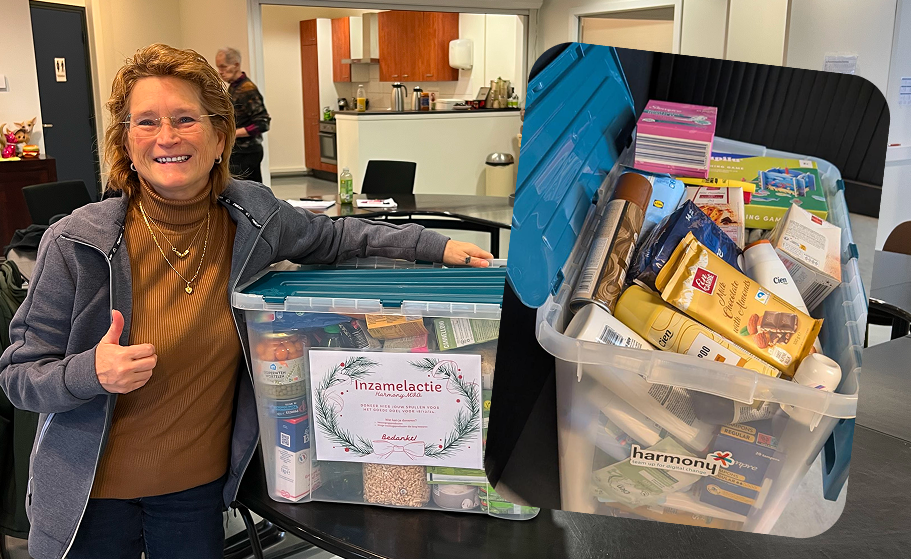
We donate regularly to different causes. But the Christmas collection drives for food banks in the Netherlands and Bosnia, and St Vincent de Paul in Belgium, always generate real engagement. We fill several boxes in the office each year.
Colleagues don't just bring items. They choose carefully. They do a bit of extra shopping for "the box." Some colleagues explain why they want to contribute. They share difficult periods. Stories about how close vulnerability sometimes sits to home.
In those moments, it doesn't feel like a "corporate initiative." It feels like something we're doing together.
Not everything is straightforward
Not every action drew large numbers immediately. Sometimes we had to remind people. Sometimes we questioned whether we were approaching it the right way.
Even when things don't go as hoped, we can still extract something from it. To stay true to ourselves, for example. Because corporate social responsibility only works if it's genuine. Not because it looks good on LinkedIn, but because it aligns with who you are as an organisation.
So we keep it simple. Start small. Listen. Adjust.
Actually, it's much like how we approach digital transformations.
What this reveals about how we work
What I find most valuable is that these initiatives don't feel imposed from above.
They emerge from conversations. From colleagues' ideas. From small suggestions that grow because people genuinely care about them.
That no-nonsense mentality suits our sector too. We believe in trying, learning and improving. Not waiting for the perfect plan, but starting and getting better as we go.
And perhaps that's the most important lesson from the past year: you don't change culture through grand statements.
You build culture through small, consistent actions.
Where we're heading
We're still at the beginning with our CSR working group. That's fine.
CSR isn't a project with an end date. It's a way of working. A way of thinking about what responsibility means.
We want to keep investing in wellbeing, sustainability and social impact. Not because it ticks a box, but because we genuinely believe it matters.
Digital progress is powerful. Digital progress with genuine attention to people; that's what we're after.


